
The NSE Nifty settled at 5,117, down 17 points. The market breadth was fairly negative, out of 2,912 shares traaded, 1,754 declined and 1,084 advanced so far on the BSE.

The rupee has remained largely stable against the US greenback in the current calendar year (CY 2024), depreciating by just 0.59 per cent so far. However, it has considerably weakened against the euro and pound. The local currency has depreciated by 1.6 per cent against the euro and 5.6 per cent against the pound, as both currencies strengthened against the dollar during this period.
Similarly, 51 per cent of 105 market participants polled by RBS said they do not expect a CRR cut in the quarterly policy announcement next Tuesday.

After infusing Rs 1,85,000 crore (Rs 1850 billion) liquidity into the banking system this month, RBI on Friday surprised the market by keeping its key rates unchanged in the mid-term review of annual monetary policy, which lowered economic growth projections to 7.5-8 per cent for 2008-09.

The finance ministry has cautioned that global and regional uncertainties and domestic disruptions may keep inflationary pressures elevated in the coming months, warranting "greater vigilance" by the government and the Reserve Bank of India (RBI). "Russia's decision to terminate the Black Sea grain deal, along with dry conditions in major wheat-growing areas, caused a price spike in cereals. Domestic factors like white fly disease and an uneven distribution of monsoon exerted pressure on vegetable prices in India," the ministry said in its latest Monthly Economic Report for July, released on Tuesday. However, the report maintained, the recent price surge in certain food items "is expected to be transitory". "Tomato prices are likely to decline with the arrival of fresh stocks by the end of August or early September.
Grand schemes for macroeconomic policy coordination have a mixed record.

'We continue to believe that the global economy will narrowly avoid a recession, despite expecting the US, Canada, and most of Europe to fall into recession at some point over the next year or so.'

India, he said, has already taken a host of reforms in banking and other sectors and is now focussing on stepping up public investment. "Compared to other nations, even among advanced countries, I think India is relatively better placed for the simple reason that India paid a certain price last decade... we had a banking system stress which was then compounded by stress in the non-banking financial sector towards 2018," he said at Amazon Smbhav Summit.

The Indian economy recovered from the Covid-induced downturn during 2022 and is poised for further improvement in the coming quarters though downside risks emanating from geopolitical tensions, strengthening dollar and elevated inflation will continue. The positive trajectory in the growth trend and improved fundamentals will help the nation in neutralising the impact of global headwinds which are expected to have a bearing on the country's exports in the months to come. The challenges before the government and the Reserve Bank in the new year would be to arrest inflation, check declining value of rupee against US dollar and promote private investment and growth, with a view to ensure that the country remains one the fastest growing major economies of the world.

'Investors can consider staying invested in long duration products as there is a possibility of rate cuts in the near term.' Positive macros - lower inflation, high forex reserves and favourable demand-supply dynamics for government bonds - make a strong case for rate cuts from December, says Devang Shah, head of fixed income, Axis Mutual Fund. In an interview with Abhishek Kumar in Mumbai, Shah says this view may not hold true if commodity prices go up sharply.

'Limited spillovers' to Asia's third-largest economy, even as world 'perilously close' to recession.

Dr Nagesh Kumar, one of the three new MPC members, wanted the MPC to reduce the repo rate by 25 basis points to 6.25%.

'The shifts in US involvement in global conflicts and geopolitical alliances could introduce uncertainties.'

The growth was primarily driven by domestic investments, which accounted for 60 per cent of the total inflows during the first quarter of the financial year.

The government on Monday ruled out making public the RBI report detailing the reasons why the central bank could not keep inflation within the targeted 6 per cent upper limit for the three consecutive quarters. "Yes sir, RBI has furnished a report to the central government, as mandated under Section 45ZN of the RBI Act, 1934 and Regulation 7 of RBI Monetary Policy Committee and Monetary Policy process Regulations, 2016," minister of state for finance Pankaj Chaudhary said in a written reply. The said provisions of the RBI Act, 1934, and regulations therein does not provide for making the report public, he said.

According to the QNB Group report, the growth in emerging markets -- from Brazil to Indonesia, Russia and South Africa -- is slowing down, partly reflecting the tightening of domestic policies by these countries last year to stabilise foreign exchange rates.

The Reserve Bank's rate-setting panel, Monetary Policy Committee (MPC), began its three-day deliberations on Wednesday amid expectations of a status quo on benchmark rate mainly on account of uncertainty over the impact of the second wave of COVID-19 pandemic. Moreover, the fears of firming inflation may also refrain the MPC from tinkering with the interest rate in its bi-monthly monetary policy outcome to be announced on Friday. The RBI had kept key interest rates unchanged at the last MPC meeting held in April.

India on Friday called on the International Monetary Fund (IMF) to reconsider its $1 billion assistance to Pakistan, suggesting that Islamabad could use it for terror funding.

The NBFCs, which filed for ECB in January with the Reserve of India (RBI), include REC (over $500 million), Tata Motors Finance ($200 million), L&T Finance Holdings ($125 million), and Shriram Finance ($750 million), according to the RBI data. A senior executive with State Bank of India (SBI) said overseas borrowing by Indian companies, including highly rated NBFCs, was likely to grow because hedging costs were low and there was a softening bias in global interest rates.

The market capitalisation of BSE-listed companies soared to an all-time high of Rs 406.52 lakh crore on Monday thanks to a rally in equities where the BSE Sensex climbed over 1 per cent. The 30-share BSE Sensex rallied 941.12 points or 1.28 per cent to finish at 74,671.28. During the day, it zoomed 990.99 points or 1.34 per cent to 74,721.15.

Warning that the new year will be riskier than the previous two in terms of growth, inflation and the perils of monetary policy normalisation on consumption demand in particular, along with other external risks, a Wall Street brokerage has pencilled in an 8.2 per cent GDP growth next fiscal, with more downside risks to the projection. The biggest risk to the projection is a derailed consumption demand that has been the main growth driver in the past many years, said the Bank of America Securities India house economists who still believe that consumption demand will remain the key driver of growth next fiscal as well.

India is poised to be the fastest-growing major economy in the world and an engine of global growth despite global headwinds, says leading industrialist and Aditya Birla Group Chairman Kumar Mangalam Birla. The economic activity in India has witnessed a sharp recovery to pre-pandemic levels on the back of a rapid and widespread rollout of the vaccination programme, Birla said in the latest annual report of UltraTech Cement Ltd. "A strong digital ecosystem, fiscal and monetary policy and various government schemes helped small and medium enterprises and the worst affected sections of the population to survive while reviving demand and bringing the economy back on track," said Birla while addressing UltraTech's shareholders.

After subdued earnings in the first half amid global headwinds, India Inc is taking a cautious approach on their capital expenditure (capex) for the second half of the financial year ending March 2025, according to management commentary. Minutes from the October monetary policy meeting show the Reserve Bank of India's (RBI's) optimism about private investments picking up.

The Reserve Bank's rate setting panel on Thursday met to finalise a report for the government on why it failed to keep retail inflation below the target of 6 per cent for three consecutive quarters since January this year, said sources. The report will be presented to the government as per the Reserve Bank of India Act, they added. The six-member Monetary Policy Committee (MPC) is headed by Governor Shaktikanta Das.

The task force will look at emerging markets, technology, regulatory and monetary policies, loss of trust in financial services, and financial inclusion.

'The prime minister's comment on 'revdi culture' was welcome. But I am disappointed he did not follow up on that.' 'All political parties, including the BJP, have been guilty of this.' 'Now, Modi's guarantees, the Congress's 'nyay' path and both ruling and Opposition parties are vying with each other for freebies in my home state Andhra Pradesh.'

Global trends and trading activity of foreign investors would largely dictate terms in the equity markets this week amid a lack of major domestic triggers, analysts said. Markets may face near-term consolidation due to elevated valuations, they noted. "While the previous week was predominantly shaped by developments in the US Federal Reserve policy, attention will now shift to the Bank of Japan's policy decision on December 19," Santosh Meena, Head of Research, Swastika Investmart Ltd, said.

Retail inflation crossed the RBI's comfort level and rose to 5.21 per cent in December on increase in prices of food items.

Crypto assets should not be granted official currency or legal tender status, the much-awaited synthesis paper by the International Monetary Fund (IMF) and Financial Stability Board (FSB) has said ahead of the G20 leadership summit under India's presidency. However, the report has argued against a blanket ban on activities linked to crypto assets, explaining that such a move can be costly as well as technically demanding to enforce. Central banks should avoid holding crypto assets in their official reserve as they pose a risk to monetary and global financial stability, according to the synthesis paper.

Investors have become poorer by over Rs 10.36 lakh crore in the last four trading sessions as the domestic equity benchmarks extended their losses amid weak global trends. The Sensex and Nifty closed in the red for the fourth straight session on Friday amid continued selling by foreign institutional investors. The BSE Sensex ended 427.44 points or 0.72 per cent lower at 59,037.18.

On the back of sound macroeconomic policies and softer commodity prices, India's growth momentum is likely to be sustained in 2023-24 in an atmosphere of easing inflationary pressures, said the Reserve Bank's annual report released on Tuesday. It, however, added that slowing global growth, protracted geopolitical tensions and a possible upsurge in financial market volatility following new stress events in the global financial system could pose downside risks to growth. "On the back of sound macroeconomic policies, softer commodity prices, a robust financial sector, a healthy corporate sector, continued fiscal policy thrust on quality of government expenditure, and new growth opportunities stemming from global realignment of supply chains, India's growth momentum is likely to be sustained in 2023-24 in an atmosphere of easing inflationary pressures," it said.

While the economy seems to be on a firm growth path, the fight against inflation is not over yet. Shaktikanta Das seems to be in no hurry. After playing well through a five-year Test match, he doesn't want to get out hit wicket, observes Tamal Bandyopadhyay.
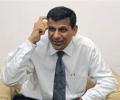
He called on developed countries to play their part in restoring international monetary cooperation.

The Reserve Bank is likely to maintain status-quo on the key interest rates for the third time in a row in its upcoming bi-monthly policy review despite the US Federal Reserve and the European Central Bank hiking benchmark rates, as domestic inflation is within the RBI's comfort zone, say experts. The borrowing cost which started rising in May last year has stabilised with RBI keeping the repo rate unchanged at 6.5 per cent since February when it was raised from 6.25 per cent. In the previous two bi-monthly policy reviews in April and June the benchmark rate was retained.

The Reserve Bank on Wednesday marginally lowered the country's GDP growth projection for the current fiscal at 6.8 per cent from its earlier estimate of 7 per cent. However, despite the downward revision in the economic growth projection, India will remain among the fastest growing major economies in the world, said RBI Governor Shaktikanta Das while announcing the latest bi-monthly monetary policy.

Among the Sensex firms, Asian Paints, Tata Steel, HCL Technologies, Nestle, Maruti, JSW Steel, NTPC and Larsen & Toubro were the major laggards. Sun Pharma, Bajaj Finserv, Reliance Industries, State Bank of India and Bharti Airtel were the gainers.

RBI Governor Subbarao has recently indicated that it cannot ignore inflationary signals.

India's foreign exchange reserves increased to $604 billion as on December 1, surpassing the $600 billion mark after a gap of about four months. The forex reserves were last above the $600 billion mark on August 11 this year. "India's foreign exchange reserves stood at $604 billion as on December 1, 2023.

'To the believers of crypto regulations, I have only one question to ask, how will you regulate it?'

Titan surged 2.98 per cent, followed by IndusInd Bank, ITC, JSW Steel, Infosys, Tech Mahindra, Tata Consultancy Services and Maruti. Hindustan Unilever, Asian Paints, Bharti Airtel and HDFC Bank were among the laggards.
